

Blog
How to Build a Critical Spare Parts Inventory for Construction and Industrial Equipment

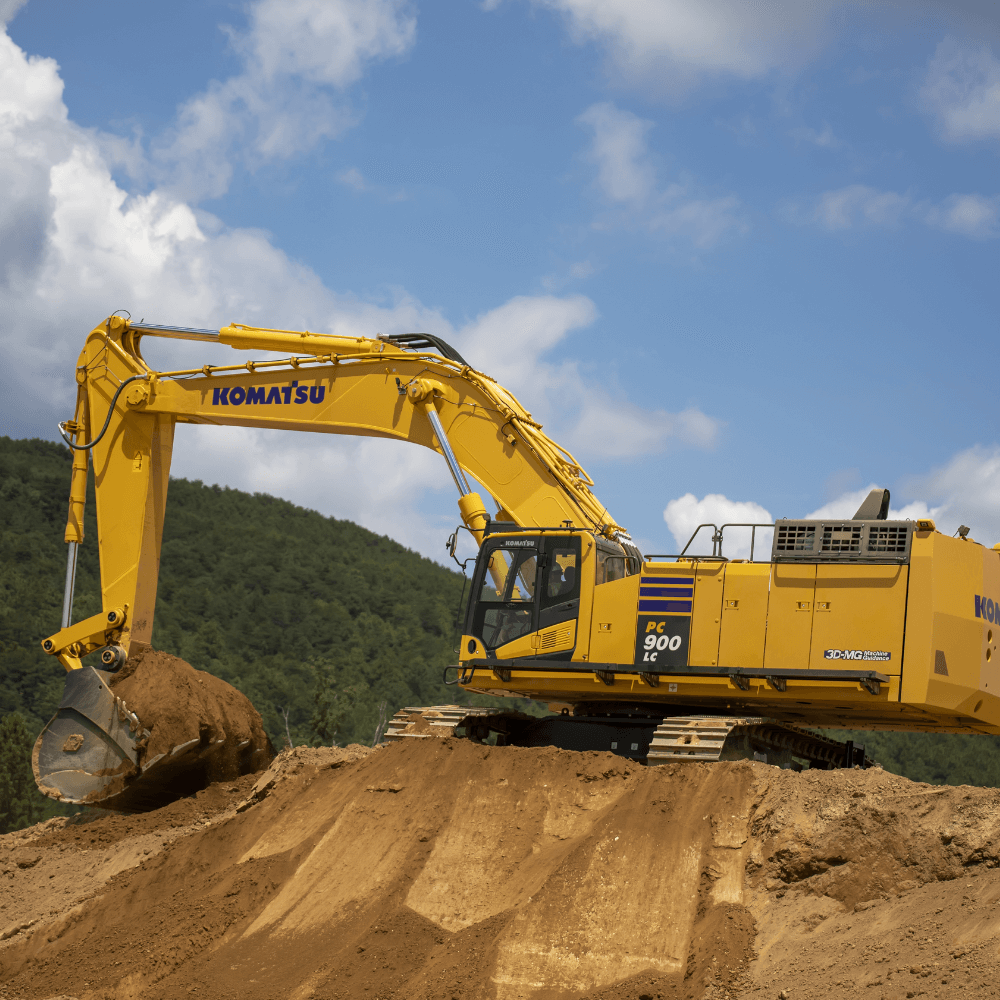
Construction and industrial equipment is expected to perform reliably in demanding environments. Excavators, loaders, bulldozers, cranes, generators, compressors, pumps, and other machines often operate for long hours under heavy loads. When a critical component fails, the repair itself may not be the biggest problem. The real problem can be waiting days or weeks for the correct replacement part.
This is why avoiding parts shortages should be an important part of every equipment maintenance strategy.
A well-designed critical spare parts inventory ensures that essential components are available when they are needed most. However, building an effective inventory does not mean buying every possible part. Overstocking expensive components can tie up capital, create storage problems, and leave businesses with obsolete inventory.
The better approach is to identify which parts are genuinely critical, understand equipment usage and failure patterns, and maintain appropriate stock levels.
What Is a Critical Spare Parts Inventory?
A critical spare parts inventory is a collection of replacement components selected because their absence could create significant equipment downtime, safety concerns, production losses, or extended repair times.
These parts may include:
- Engine filters
- Fuel filters
- Hydraulic filters
- Belts
- Hoses
- Seals
- Bearings
- Sensors
- Electrical components
- Hydraulic valves
- Pumps
- Starters
- Alternator components
- Wear parts
The exact inventory depends on the equipment fleet, operating environment, supplier availability, and consequences of failure.
1. Start With Your Equipment List
Before purchasing spare parts, create a complete list of the machines your business operates.
Record:
- Equipment manufacturer
- Model
- Serial number
- Engine model
- Operating hours
- Location
- Application
- Criticality
- Maintenance schedule
This information provides the foundation for accurate spare-parts planning.
A construction company with several excavators, for example, should know exactly which models are operating at each site and which components are shared between machines.
2. Identify Critical Machines
Not every machine requires the same level of spare-parts support.
Ask what would happen if each machine stopped working.
Consider:
- Would production stop?
- Would the project be delayed?
- Is another machine available?
- Can equipment be rented quickly?
- How long would replacement parts take to arrive?
- Is the machine supporting safety-critical operations?
A machine with no backup and a high daily operating cost should receive a higher inventory priority.
3. Identify Critical Parts
Once critical machines are identified, determine which components could cause extended downtime if they failed.
A useful question is:
“If this component fails today, can we obtain the correct replacement quickly?”
If the answer is no, the component may deserve consideration for critical stock.
For example, a specialized electronic controller might fail only rarely, but if delivery takes four weeks, keeping one approved replacement available could prevent a lengthy shutdown.
4. Analyze Maintenance History
Past maintenance records can reveal which components are most likely to be needed.
Review:
- Number of replacements
- Failure frequency
- Average component life
- Emergency repairs
- Maintenance intervals
- Previous downtime events
- Parts used during major overhauls
If a particular hydraulic hose has repeatedly failed during the past year, keeping a replacement available may be justified.
Historical data is much more useful than guessing which parts might fail.
5. Separate Fast-Moving and Slow-Moving Parts
Not all inventory should be managed the same way.
Fast-moving parts are used frequently and should normally have predictable stock levels.
Examples include filters, belts, seals, and common wear parts.
Slow-moving parts may be expensive and rarely needed but still critical.
Examples might include specialized pumps, electronic controllers, or machine-specific assemblies.
Fast-moving components can often be stocked based on average consumption, while slow-moving critical parts require a different risk-based approach.
6. Consider Supplier Lead Time
Lead time is one of the most important factors when deciding what to stock.
A part that arrives within 24 hours may not need the same inventory level as a component that requires several weeks to source.
For every critical part, record:
- Normal delivery time
- Emergency delivery options
- Supplier location
- Availability
- Minimum order quantity
- Alternative approved sources
Long lead times increase the value of keeping appropriate safety stock.
7. Set Minimum and Maximum Stock Levels
Each stocked component should have defined inventory limits.
The minimum stock level represents the point at which a new order should be triggered.
The maximum stock level prevents excessive inventory accumulation.
For example, if a machine consumes a certain filter regularly and the supplier takes several weeks to deliver it, the reorder level should provide enough stock to cover expected consumption during that period.
Add an appropriate safety margin for critical equipment.
8. Create Safety Stock for High-Risk Components
Safety stock provides protection against unexpected demand or supplier delays.
However, it should be used strategically.
Consider maintaining safety stock when:
- Failure would stop production.
- The part has a long lead time.
- The component is difficult to source.
- Failure history is significant.
- No suitable alternative is readily available.
- The machine has no backup.
For expensive components, calculate the cost of inventory against the financial impact of equipment downtime.
9. Verify Every Part Number
One of the worst types of parts shortages is discovering that the available part is the wrong one.
A warehouse may show a component as “in stock,” but if it does not fit the machine, the equipment remains down.
For every critical part, verify:
- Manufacturer
- Part number
- Equipment model
- Serial-number compatibility
- Dimensions
- Technical specifications
- Approved replacement numbers
Avoid purchasing components based only on appearance.
10. Track Parts by Equipment
Create equipment-specific parts lists.
For each machine, record the critical components required for:
- Routine service
- Common repairs
- Emergency repairs
- Major overhauls
This makes parts identification faster and reduces purchasing mistakes.
If multiple machines use the same component, identify that commonality. Standardization can reduce the total number of different parts that need to be stocked.
The Main Solution to Avoiding Parts Shortages
The best solution to avoiding parts shortages is to combine criticality analysis, consumption tracking, supplier lead times, accurate part identification, and safety-stock planning.
A practical process is:
List equipment → Identify critical machines → Identify critical components → Review failure history → Check lead times → Set reorder levels → Maintain safety stock → Monitor usage → Review inventory regularly
This approach prevents businesses from relying solely on emergency purchasing after a failure occurs.
Build Emergency Repair Kits
For frequently serviced equipment, consider creating dedicated spare-parts kits.
A preventive maintenance kit might include filters, seals, gaskets, and other regularly replaced components.
An emergency kit could contain commonly required electrical or hydraulic components.
Keep the kit labeled for a specific equipment model or application.
This can significantly reduce the time required to locate parts during an unexpected failure.
Use Inventory Management Software
As equipment fleets grow, spreadsheets can become difficult to manage.
An inventory or maintenance-management system can track:
- Current stock
- Parts consumption
- Reorder levels
- Purchase orders
- Supplier lead times
- Equipment compatibility
- Maintenance schedules
- Historical failures
- Storage locations
Automatic alerts can notify maintenance teams when stock falls below the established reorder level.
Avoid Overstocking
The goal is not to keep the largest possible inventory.
Overstocking can create:
- Excess capital costs
- Storage expenses
- Obsolete components
- Shelf-life problems
- Duplicate inventory
- Difficult inventory management
Use actual consumption, equipment criticality, supplier lead times, and failure history to determine appropriate quantities.
Review the Inventory Regularly
A critical spare-parts list should evolve as your business changes.
Review it periodically and ask:
- Which parts are being used most?
- Which parts have never been used?
- Which components caused recent downtime?
- Have supplier lead times changed?
- Has the equipment fleet changed?
- Are any parts obsolete?
- Are current part numbers still valid?
- Can several machines use the same approved component?
Regular reviews keep inventory aligned with actual operational needs.
Partner With Reliable Suppliers
A dependable supplier can be an important part of your parts-shortage strategy.
Choose suppliers that can provide accurate parts identification, availability information, technical specifications, and realistic delivery estimates.
For critical components, establish supply arrangements before an emergency occurs.
It is also useful to know whether approved alternative or superseded part numbers are available.
Keep Critical Parts Properly Stored
Having a part in inventory is only useful if it remains in usable condition.
Protect components from moisture, dust, excessive temperature, sunlight, contamination, and physical damage.
Use appropriate labeling and storage procedures, and inspect long-term inventory periodically.
This is especially important for rubber seals, hoses, electronic components, batteries, filters, and precision metal components.
Final Thoughts
Parts shortages can turn a relatively simple equipment repair into a costly downtime event. Construction and industrial businesses can reduce this risk by developing a critical spare-parts inventory based on actual equipment needs rather than guesswork.
For companies focused on avoiding parts shortages, the most effective strategy is to identify critical machines, determine which components could cause extended downtime, analyze failure history, consider supplier lead times, and maintain appropriate safety stock.
Start with high-use maintenance components such as filters, belts, hoses, seals, and wear parts. Then evaluate expensive or specialized components based on their criticality and availability.
Most importantly, verify every part number and equipment application before purchasing. An incorrectly identified spare is effectively the same as having no spare at all.
A successful inventory strategy is a balance between availability and cost. You need enough parts to respond quickly to failures, but not so many that money is unnecessarily tied up in unused stock.
When equipment information, maintenance schedules, supplier data, and inventory levels are managed together, businesses can respond to repairs faster, reduce emergency purchasing, minimize downtime, and keep construction and industrial equipment working when it matters most.


